
Marine Holding Tank Maintenance: Keep Odors Under Control
21st Aug 2026
An unpleasant smell can send you straight to the holding tank, but that’s not always where the problem starts. A loose connection or a gray water sump overdue for cleaning can leave you chasing odors even after a pump-out.
Keeping your boat’s waste system in good condition starts with understanding how the parts work together. Here’s what deserves a regular check, why cleaning matters, and where treatments and vent filters can help.
Why Proper Waste Storage Matters
Wastewater from boats can introduce pollutants and harmful organisms into the surrounding water. Depending on the vessel, onboard waste may include black water from toilets; gray water from showers, bidets, and sinks; galley wastewater; and waste oil. Each has different handling and disposal requirements.
Discharge rules vary by region, waste type, vessel, and treatment system. In designated U.S. sewage no-discharge zones, both treated and untreated sewage discharge is prohibited. Larger yachts on international voyages may also fall under MARPOL sewage discharge requirements established through the International Maritime Organization. Check the requirements for the waters you’ll be navigating before releasing waste overboard.
Holding tanks allow wastewater to remain onboard until it can be disposed of appropriately. Keeping those tanks and their connected plumbing in good condition helps make storage manageable while limiting odors.
How Tank Connections and Venting Affect Odors
Waste tanks have inlet and outlet fittings, and some have several connections or access ports. Each is a potential escape point for odors if a connection becomes loose or a seal fails.
Tanks also need ventilation. As waste enters, air must leave. As waste is pumped out, air must enter. The vent allows the level to change without creating excessive pressure or vacuum inside the tank.
Black water tanks must vent outside the vessel. Sewage gases can be hazardous, so an odor inside the boat deserves investigation. Check accessible fittings, hose connections, and access ports, along with vent plumbing that may be kinked or obstructed.
The location and timing of a smell offer useful clues. Odor outside immediately after flushing may be coming from the vent. A persistent smell inside the tank compartment calls for a closer inspection of the system. Also check for stagnant bilge water trapped behind or beneath structures, which can cause odors unrelated to the waste tank.
Why Black Water Develops Strong Odors
Black water contains human waste carried into the holding tank through the marine toilet. That waste supports bacteria and other organisms that reproduce and die as the contents break down.
Two groups matter when discussing odor: aerobic bacteria, which need oxygen, and anaerobic bacteria, which thrive without it. Anaerobic activity is a primary source of the foul, sulfurous smell associated with sewage.
Because this process happens inside the tank, boat owners may give it little thought until odors become noticeable. Routine maintenance helps address accumulated waste before odors prompt an investigation.
Gray Water Can Cause Odors, Too
Gray water may have little odor initially, but accumulated residue can develop a strong smell. Galley waste can be particularly troublesome, while soap, oils, skin cells, and hair also collect in sumps.
Many boats use small sumps that automatically pump gray water overboard. That arrangement may be acceptable in some locations but won’t meet every area’s discharge requirements.
Sump construction also affects where odors go. Many lids aren’t tightly sealed, allowing smells to escape into the surrounding compartment. If an odor remains after servicing the black water tank, check nearby gray water sumps.
Be sure to clean sumps periodically, removing accumulated debris from accessible components according to the equipment instructions. Depending on use and what drains into them, cleaning may be needed monthly or as infrequently as annually. Regular inspection will help you find the right cleaning schedule for your boat.
Inspect, Empty, and Rinse Waste Tanks Regularly
A quick visual inspection before a trip can identify a developing problem before it affects use of the boat. Look for dampness, staining, loose connections, broken clamps, missing caps, and damaged hoses around accessible parts of the system. Check that nothing has shifted or fallen against the tank or surrounding equipment.
Waste tanks also need periodic emptying and cleaning. Pump-out removes most of the contents, but residue can remain. A thorough rinse helps break up that material so it can be pumped out.
For routine maintenance, the tank doesn’t need to be sanitized. The objective is to remove accumulated waste. Follow the rinse procedure for your system, and avoid harsh cleaners that can damage its components.
Add a Suitable Holding Tank Treatment
After emptying and rinsing the black water tank, add a compatible treatment with fresh water according to the product directions.
Treatment formulations differ. Check ingredients, system compatibility, and any local restrictions rather than assuming every holding tank chemical is suitable.
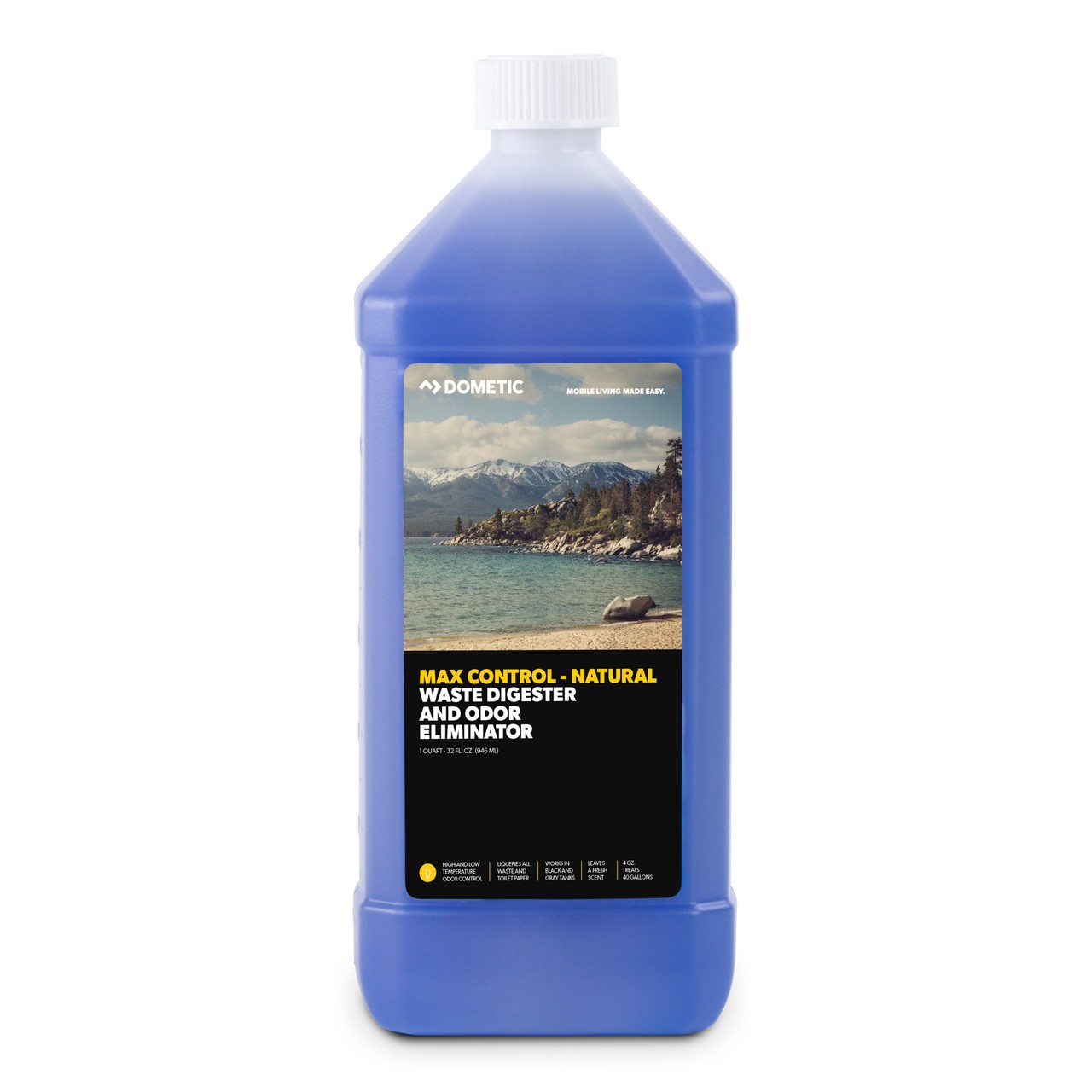
A biological product such as Dometic Max Control Natural® uses an enzyme and bacteria formula to help break down waste and control odors without formaldehyde or bronopol. Follow the label for the amount of treatment and water to add.
Use a Vent Filter to Reduce Odors Outside the Boat
When a toilet flushes, water, waste, and sometimes additional air enter the holding tank. An equal volume of air is pushed out through the vent. Without odor control, that air can carry an unpleasant smell toward the dock or a neighboring boat.
A properly sized and installed vent filter removes odor-causing compounds from the outgoing air, often reducing the smell substantially. It addresses odors leaving the vent, while tank cleaning and treatment address conditions inside the tank.
Installation and maintenance matter because the vent must still allow adequate airflow. For guidance on sizing, placement, moisture, and replacement, read How Vent Filters Help Control Holding Tank Odors on Boats.
Aeration Is Another Odor-Control Option
Aeration introduces air into the waste to support aerobic bacteria and discourage the anaerobic conditions associated with strong sewage odors. Aerobic decomposition can have an earthy character, closer to decomposing leaves than the sulfurous smell commonly associated with sewage.
Aeration is generally practical only on larger vessels with liveaboard crew. An aeration system requires power and a large vent capable of releasing the added air without excessive back pressure. Its suitability depends on the tank, available equipment space, and the ability to keep the system operating as intended.
If you’re considering aeration, Environmental Marine can help discuss the system requirements and whether it’s a practical approach for your vessel.
Get Help with Your Marine Waste System
Odor control starts with understanding the source. Cleaning a sump, correcting a connection problem, treating tank contents, and filtering vent air each address different conditions.
Environmental Marine is here to help you identify what to check and find suitable treatments, vent filters, and replacement parts. Just tell us where you notice the odor, when it occurs, and what maintenance you’ve already tried.
You can contact us online, start a live chat, or call 800-522-2656 to speak with one of our marine sanitation experts Monday through Friday, 8:00 a.m. to 4:30 p.m. ET.
Frequently Asked Questions
Why does my boat still smell after a pump-out?
Residue may remain inside the holding tank, but the smell can also come from a loose connection or dirty gray water sump. Note where the odor is strongest and whether it appears during flushing or remains continuously. Those details help narrow down what needs attention.
Do I need to sanitize the holding tank?
Routine cleaning focuses on loosening and removing waste residue so it can be pumped out. Sanitizing isn’t necessary for normal maintenance. Use cleaning products and procedures compatible with your system.
Can gray water smell as bad as black water?
Yes. Galley waste and accumulated soap, oils, and other debris can produce strong odors. A sump with a loosely fitted lid can release those smells into the compartment where it’s installed.
Will a vent filter fix odors inside the boat?
A vent filter treats air leaving the tank through the outside vent. It won’t repair a leaking connection or clean a dirty sump. Persistent interior odors need investigation to identify their source.
Should I empty the waste tank before leaving the boat?
Environmental Marine recommends emptying waste tanks when the boat will sit unused for more than a few days. After rinsing, follow your treatment’s directions for adding product and fresh water. Longer storage or winterization may require additional steps.
Still have questions? Explore our Frequently Asked Questions for expert answers on marine sanitation systems, marine plumbing products, replacement parts, and more.