
How Vent Filters Help Control Holding Tank Odors on Boats
17th Jul 2026
If you've ever noticed an unpleasant odor outside your boat immediately after flushing the head, you're not alone. Holding tank odors are one of the most common issues boat owners experience, especially on pleasure boats where vent locations aren't always ideal.
Fortunately, a properly installed vent filter can dramatically reduce those odors before they escape the holding tank, making your time on the water more enjoyable for everyone onboard—and everyone nearby.
Why Holding Tank Odors Escape
As waste breaks down inside a marine holding tank, it produces gases that create the unpleasant odors most boat owners are familiar with.
Every time the toilet is flushed, waste enters the holding tank and displaces an equal amount of air. That air has to go somewhere, so it's pushed out through the holding tank vent. Depending on the location of the vent, those odors may be released near the cockpit, swim platform, or neighboring boats. On many pleasure boats, there's simply no practical place to locate the vent where escaping odors won't occasionally be noticed.
How Marine Vent Filters Work
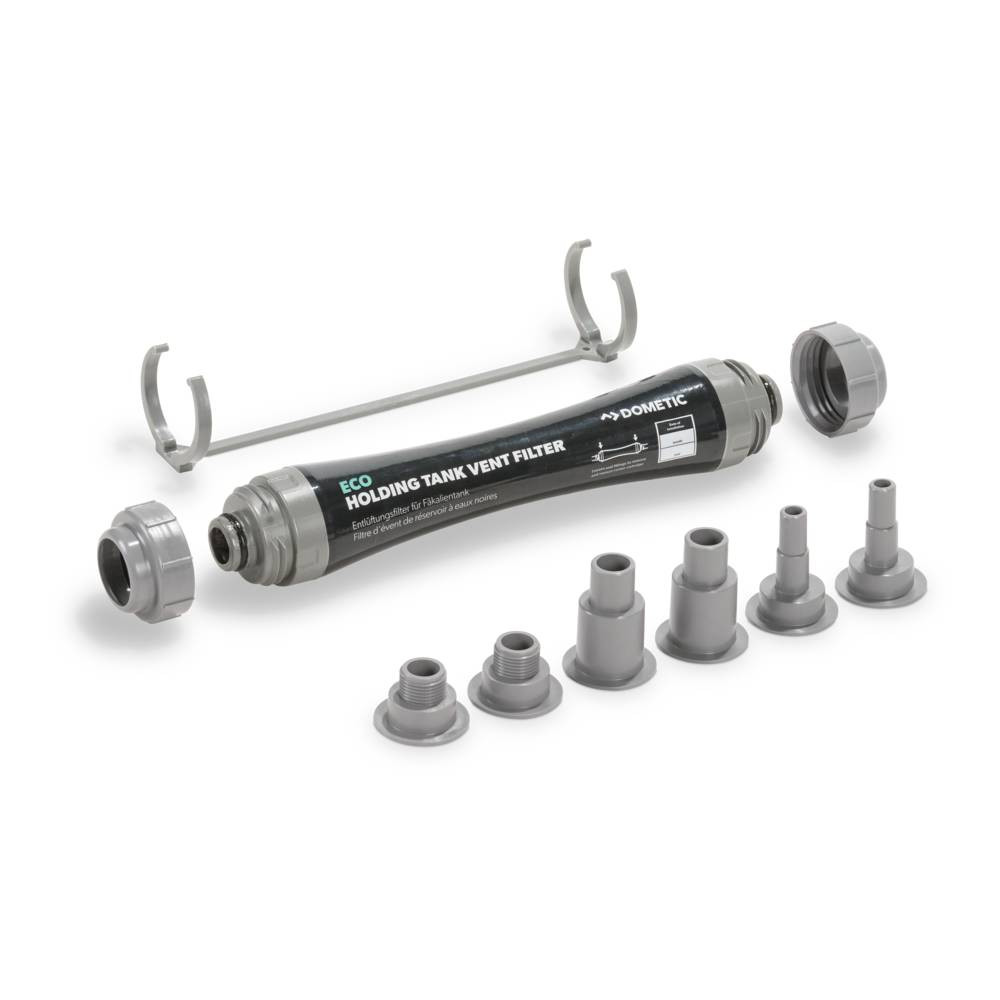
A vent filter is designed to remove odor-causing compounds from the air before it leaves the holding tank.
Inside every vent filter is activated carbon, which has been used for decades to remove odor-causing volatile organic compounds (VOCs) from both air and water. As holding tank air passes through the filter, the activated carbon traps those compounds before the air is vented overboard.
When properly sized and installed, a vent filter can dramatically reduce holding tank odors without affecting the normal operation of your sanitation system.
Which Boats Benefit Most from Vent Filters?
Vent filters are especially effective on pleasure boats equipped with macerator toilets and Dometic VacuFlush® or VacuMax® systems.
Larger commercial and vacuum-operated sanitation systems move much greater volumes of air with every flush. While vent filters can still be used, the size required often makes them impractical. Fortunately, these vessels usually have enough space to install more effective venting systems, making vent filters less necessary.
Why Proper Installation Matters
Installing a vent filter correctly is just as important as choosing the right one.
Because vent filters naturally create a small amount of back pressure, they should always be properly sized for the sanitation system. An undersized or poorly maintained filter can restrict airflow enough to allow odors to escape inside the boat.
The filter should also be installed above the highest possible level of the holding tank, with the vent hose routed so water cannot collect inside the line. This allows any condensation or rainwater to drain naturally rather than soaking the activated carbon inside the filter.
A vent filter can't perform properly if it's installed incorrectly. Even the best filter can lose effectiveness if moisture becomes trapped inside the housing or vent line.
Choosing the Right Vent Filter
When properly installed and maintained, a quality vent filter can significantly reduce holding tank odors before they escape your boat. Combined with routine holding tank maintenance, it's one of the easiest ways to improve your onboard boating experience.
Whether you're replacing an existing filter or installing one for the first time, Environmental Marine offers the products and technical expertise to help you get the job done right. Browse our selection of marine vent filters, contact us online, start a live chat, or call 800-522-2656 to speak with one of our marine sanitation experts Monday through Friday, 8:00 a.m. to 4:30 p.m. ET.
Frequently Asked Questions
Do all boats need a vent filter?
No. Vent filters are most beneficial on pleasure boats where the holding tank vent is located in an area where escaping odors may be noticeable. Larger vessels often have more flexibility in vent placement, making a vent filter less necessary.
Will a vent filter eliminate holding tank odors completely?
A vent filter is designed to remove odors from the air leaving the holding tank through the vent. While it can significantly reduce odors outside the boat, it won't correct other issues within the sanitation system, such as leaks, clogged hoses, or overdue maintenance.
Can I install a vent filter on any marine sanitation system?
Vent filters work best with macerator toilets and Dometic VacuFlush® or VacuMax® systems. They can also be used on other marine sanitation systems, but high-airflow commercial or vacuum-operated toilets may require much larger filters, making them impractical for some installations.
Why do some vent filters last longer than others?
The lifespan of a vent filter depends on several factors, including how often the boat is used, humidity, and whether moisture reaches the activated carbon. High humidity, condensation, rainwater, wave splash, or liquid from the holding tank can all shorten the filter's life. Proper installation and annual replacement help keep the filter performing at its best.
Can a vent filter affect my holding tank system?
A properly sized vent filter creates only minimal back pressure and shouldn't affect normal system operation. However, an undersized or clogged filter can restrict airflow, and on some systems that use pressure-based tank level sensors, temporarily inaccurate readings may occur during flushing or pump-out.
How often should I replace my vent filter?
Most recreational boat owners can expect a Dometic vent filter to last an entire boating season. Environmental Marine recommends replacing the filter at least once a year, although heavy use or high humidity may require more frequent replacement.
Still have questions? Explore our Frequently Asked Questions for expert answers on marine sanitation systems, marine plumbing products, replacement parts, and more.